Introduction
Definition
Literal Meaning: Zakat means to purify, to increase, and to grow. When a Muslim pays zakat, their wealth is purified and increased. Through zakat, we help poor people who cannot afford food, education, or basic necessities.
Islamic Meaning: The fixed amount of money that Muslims give to needy people to purify their wealth and to please Allah is known as zakat. Zakat is 2.5% of a person’s wealth that is due once a year.
Broader Context: Zakat is part of a Muslim state’s revenue system. It is both a personal (individual) and social (state) responsibility. As the 4th pillar of Islam, zakat is a mandatory part of the faith and a necessary condition for the purification of wealth.
Zakat in the Light of Quran and Hadith
Allah Almighty does not like greedy people who only collect and count money and never spend it. Just as the fast of Ramadan purifies the believer through renouncing the world, the zakat purifies the believer by encouraging a charitable disposition and a lack of attachment to worldly belongings. Allah has also criticized the ones who keep a tremendous amount of fondness for collecting more money and keep on counting it with pride. Allah SWT says that none`s wealth will give them any favor in the hereafter and such people will inhabit the never-ending torment of hell.
[Surah Humazah]
Zakat is a shared obligation as it is the right of the locals. The Prophet ﷺ send Mu’adh to Yemen and said, “Teach the people there about the oneness of Allah, Prayer, and take Zakat from the rich and give to the poor.” [Hadith]
He ruled amongst them for years, calling them to Islam. One year, during the caliphate of the great companion, Umar bin Khattab, Mu’adh sent one-third of the Zakat of Yemen to Madinah. This action upset Umar and he admonished Mu’adh, saying that he was sent to take from the rich and give to the poor, not to be a tax collector. To this, Mu’adh replied, “I would not send you anything had I found someone to take it from me.” [Hadith]
Who is Involved in Zakat?
1. The Giver (Sahib-e-Nisaab)
A person on whom zakat is due is called Sahib-e-Nisaab (eligible to pay zakat). Zakat becomes obligatory when a person possesses wealth equivalent to:
| Asset Type | Nisaab Threshold |
|---|---|
| Gold | 7.5 tola |
| Silver | 52.5 tola |
| Cash & Equivalents | Value equivalent to above |
| Camels | 5 |
| Cows | 30 |
| Goats/Sheep | 40 |
Key Conditions:
- One full lunar year must pass while possessing wealth above the nisaab threshold
- Zakat rate: 2.5% on cash and its equivalents
Zakat Rates for Different Asset Types
| Asset Category | Zakat Rate |
|---|---|
| Cash & Equivalents | 2.5% |
| Gold & Silver | 2.5% |
| Agricultural Produce | 2.5% to 20% (varies by irrigation method and crop type) |
| Business Inventory | 2.5% |
| Livestock | Varies by animal type and quantity |
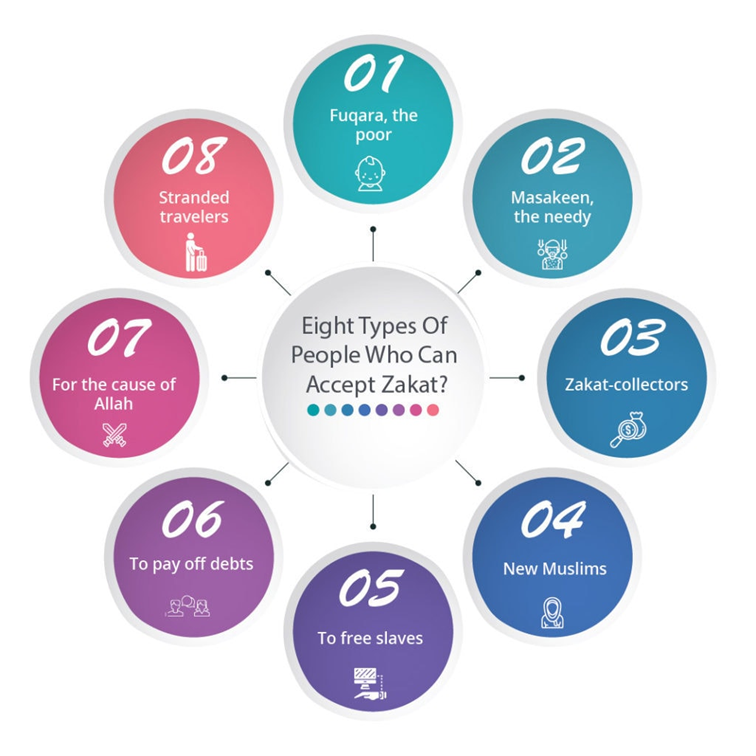
2. The Receiver (Masarif-e-Zakat)
People who are eligible to receive zakat are called Masarif-e-Zakat. The Quran specifies eight categories of recipients in Surah At-Taubah:
The State vs. Individual Debate
Islamic Perspective on State Responsibility
The Quran establishes that zakat collection and distribution is ideally a state function:
ٱلَّذِينَ إِن مَّكَّنَّـٰهُمْ فِى ٱلْأَرْضِ أَقَامُوا۟ ٱلصَّلَوٰةَ وَءَاتَوُا۟ ٱلزَّكَوٰةَ وَأَمَرُوا۟ بِٱلْمَعْرُوفِ وَنَهَوْا۟ عَنِ ٱلْمُنكَرِ ۗ وَلِلَّهِ عَـٰقِبَةُ ٱلْأُمُورِ
“Those who, when We empower them in the land, establish prayer, and give regular charity, enjoin what is right, and forbid what is wrong. To Allah belongs the outcome of all affairs.” [Surah Al-Hajj:41]
فَإِذَا ٱنسَلَخَ ٱلْأَشْهُرُ ٱلْحُرُمُ فَٱقْتُلُوا۟ ٱلْمُشْرِكِينَ حَيْثُ وَجَدتُّمُوهُمْ وَخُذُوهُمْ وَٱحْصُرُوهُمْ وَٱقْعُدُوا۟ لَهُمْ كُلَّ مَرْصَدٍۢ ۚ فَإِن تَابُوا۟ وَأَقَامُوا۟ ٱلصَّلَوٰةَ وَءَاتَوُا۟ ٱلزَّكَوٰةَ فَخَلُّوا۟ سَبِيلَهُمْ ۚ إِنَّ ٱللَّهَ غَفُورٌۭ رَّحِيمٌۭ
“But if they repent, establish prayer, and give zakat, then open the way for them…” [Surah At-Taubah:5]
These verses indicate that the Islamic state has the authority and responsibility to collect and distribute zakat, making it part of the formal economic system.
Objectives of Zakat
1. Pleasure of Allah
Allah does not love those who refrain from spending in His name, claiming “this is my money—I earned it.” The Prophet ﷺ said:
“It is better for you to spend more, so Allah will increase you, than to stop spending.” [Hadith]
2. Purification of the Soul
Just as fasting (Soum) purifies the body, zakat purifies one’s wealth and soul. Allah Almighty dislikes greedy people who only collect and count money without spending it. While fasting purifies the believer through renouncing worldly pleasures, zakat purifies by encouraging charitable disposition and detachment from material belongings.
3. Ensuring Equity
Zakat helps eradicate the gap between rich and poor cultures. The rich pay zakat, and the poor receive it, enabling the less fortunate to live with dignity.
4. Ensuring Dignity
Zakat preserves the dignity of the poor because they do not need to ask rich people for help—the wealthy are obligated to give. An elderly person does not have to beg; zakat ensures their honor is protected.
5. Ensuring Progress
Zakat contributes to societal progress by providing basic needs—education, food, and healthcare—to those who cannot afford them, enabling upward mobility.
Benefits of Zakat
Benefits to the Giver
| Category | Benefits |
|---|---|
| Individual | Purification of wealth, spiritual growth, Allah’s blessings |
| Family | Barakah in earnings, protection from hardships |
| Community | Reduction in crime (theft, robbery), social harmony |
| Economic | Circulation of wealth, economic balance |
| Spiritual | Increased faith, detachment from materialism |
Benefits to the Receiver
- Alleviation of poverty
- Opportunity for self-upliftment
- Access to education
- Preservation of dignity (no need to beg)
- Ability to meet basic needs
Benefits to Society
- Circulation of wealth from rich to poor
- Increased purchasing power among lower-income groups
- Ensured “trickle-down” economics—money flows from wealthy to needy
- Reduced economic disparity
- Social cohesion and unity
The Future of Zakat: Analysis
A Society Without Zakat
In societies where wealth redistribution mechanisms are absent, the rich inevitably get richer while the poor become poorer. This creates:
- Social unrest
- Increased crime rates
- Class warfare
- Loss of social cohesion
The Islamic Welfare State Concept
Zakat forms the foundation of the Islamic welfare state—a built-in system of wealth redistribution that ensures no member of society is left behind.
Western Parallels
Western countries have developed the concept of progressive taxation, where higher earners pay a larger percentage of their income, and the revenue is used for social welfare programs. This mirrors the redistributive justice that Zakat has embodied for over 1400 years.