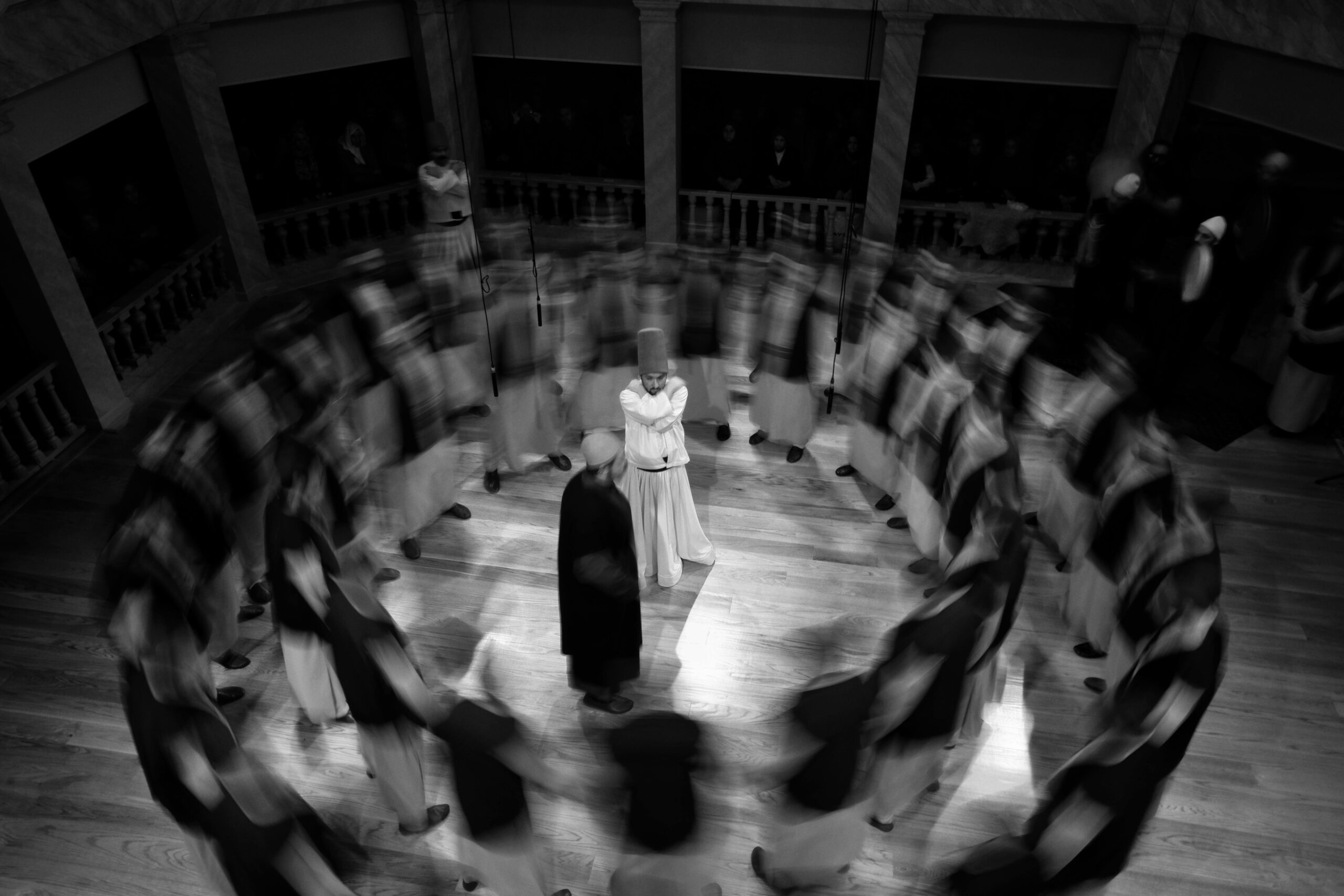
In the modern age, we often treat the question of a Creator as a binary choice between “religious dogma” and “scientific materialsim.” Yet, for the curious mind, this dichotomy is a false choice. The existence of the universe, the complexity of life, and the presence of human consciousness are phenomena that demand a rigorous intellectual investigation.
Rather than approaching this topic through emotional appeal, let us examine the logical, scientific, and philosophical framework that points toward the existence of a Creator.
1. The Cosmological Argument: The Law of Causality
The most fundamental principle of human reason is the Law of Causality: Every effect must have an adequate cause.
- The Beginning: Modern cosmology (the Big Bang theory) confirms that the universe had a beginning.
- The Logic: If the universe had a beginning, it cannot be its own cause. It requires an external cause that exists outside of time, space, and matter.
- The Deduction: A cause that is outside of time and space must, by definition, be immaterial and eternal—qualities traditionally attributed to a Creator.
Key takeaway: If you accept that the universe is not eternal, you must accept that there is a “First Cause” that set the gears of physics in motion.
2. The Teleological Argument: The Fine-Tuning of Physics
If you were to walk into a room and find a watch, you would conclude that a watchmaker exists. The universe is far more complex than any watch.
Physicists have discovered that the universe is governed by fundamental constants—such as the strength of gravity, the electromagnetic force, and the expansion rate of the universe. If any of these values were altered by even a fraction of a percent, stars would not form, and life would be impossible.
- The Probability Problem: The mathematical probability of this “fine-tuning” occurring by sheer random chance is effectively zero.
- The Inference: When we observe high levels of complexity and precision, the most logical inference is Intelligent Design, not accidental chaos.
3. The Informational Argument: DNA as Code
In the 21st century, we know that life is not just biology; it is information. The DNA molecule is essentially a digital code—a biological instruction set.
- Software vs. Hardware: In computer science, we know that code (software) always originates from an intelligent mind (a coder).
- The Analogy: If we find a complex set of instructions in a computer, we never assume it “evolved” from the silicon chips. Similarly, the existence of dense, complex information in biological systems suggests a “Programmer” of life.
4. The Moral Argument: The Source of “Ought”
Humans possess a unique faculty: the ability to recognize objective moral values. We understand concepts like justice, kindness, and duty.
- The Problem with Materialism: If humans are merely biological machines, “justice” is just a subjective preference—no different than preferring one color over another.
- The Alternative: The fact that we feel a moral imperative to do “right” suggests that morality is not a social construct, but a reflection of an objective moral law, pointing to a Moral Lawgiver.
Synthesis: Diverse Paths to a Single Truth
When exploring these deep philosophical questions, one finds that there are multiple methodologies available to the seeker. Some, such as the methodical inquiries of Javed Ahmed Ghamidi, emphasize the innate human faculty of reason and Fitrat (innate nature), while others, like the comparative and scientific approach championed by Dr. Zakir Naik, focus on empirical evidence and scriptural concordance. Despite their different starting points, both approaches invite the student to use their intellect to reach a reasoned conclusion rather than relying on blind imitation.
Summary: A Checklist for the Inquisitive Mind
| Argument | The Core Logic |
| Cosmological | Every effect needs a cause; the universe is the effect. |
| Fine-Tuning | The universe is too precise to be a result of random chaos. |
| Informational | DNA is a complex code; code requires a coder. |
| Moral | The objective sense of right/wrong points to a Moral Lawgiver. |
Conclusion: Intellectual Sovereignty
Proving the existence of a Creator is not merely an exercise in winning a debate; it is an exercise in intellectual sovereignty. When you examine the evidence—the logic of causality, the precision of physics, the information in your DNA, and the morality of your conscience—you move from assuming truth to discovering it.