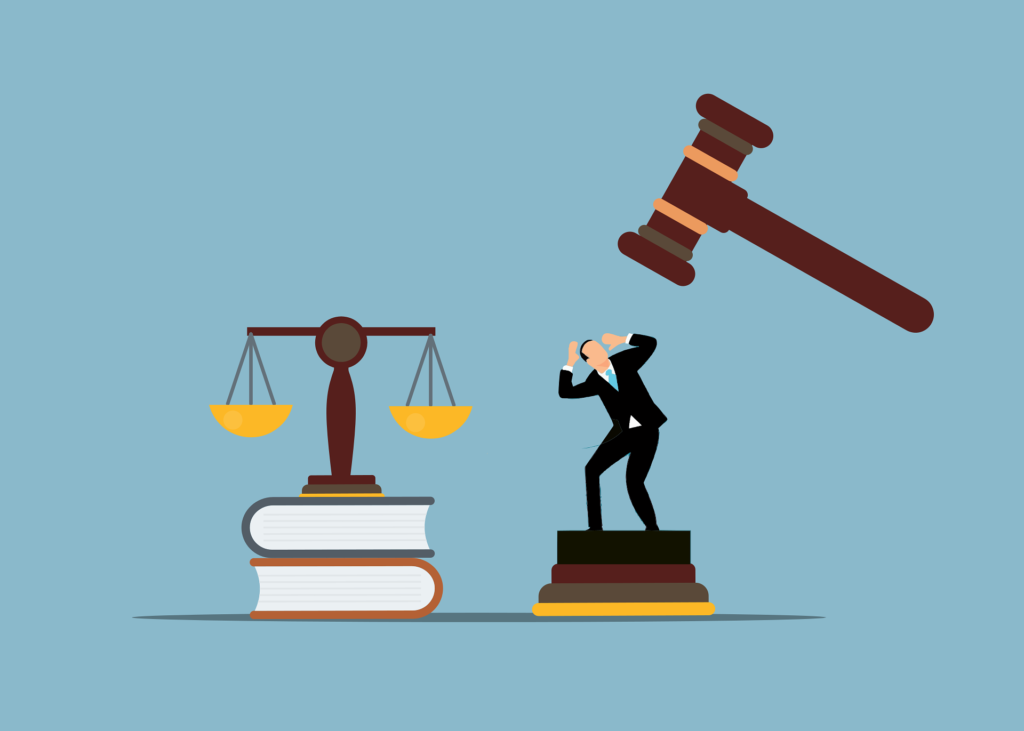
The only difference that defines the destinies of poor and rich countries is their institutions. Inclusive institutions bring prosperity; extractive institutions bring misery and poverty. This insight from Acemoglu and Robinson in Why Nations Fail cuts to the heart of the matter: governance, channelled through institutions, is what makes nations rise or fall. For Pakistan, this truth hits close to home.
It is because Pakistan faces a deep crisis of good governance that includes political instability, institutional inertia, lack of digital adaptation, centralisation of power, and widespread corruption. All of this has contributed to this failure. The consequences are visible everywhere: rising inequality, declining business confidence, eroding public trust, poor human development, and a painfully slow justice system.
Yet, this crisis is not unique to Pakistan, nor is it irreversible. Many nations have faced similar challenges and overcome them. Singapore’s transformation from a resource-poor island to a global hub is one such example. This essay explores the roots of Pakistan’s governance crisis, its manifestations, and the path toward meaningful reform.
What is Good Governance?
Governance, at its simplest, means the process of making and implementing decisions. Good governance adds a layer of quality to this process. It is defined by key characteristics: participation, rule of law, transparency, responsiveness, consensus orientation, equity, effectiveness, efficiency, and accountability. When these principles are upheld, institutions function well and citizens prosper. When they are ignored, the state falters.
Part I: The Roots of Crisis
1. Political Instability and Inconsistent Policies
Perhaps the most fundamental cause of bad governance in Pakistan is political instability. Since the 1990s, governments have rarely completed their tenures. Each new administration brings its own priorities, undoing the work of its predecessor. Economic policies, for instance, have swung wildly—from nationalization under Bhutto to privatization under later governments. As economist Ishrat Hussain has noted, this inconsistency has made long-term planning nearly impossible. Investors cannot plan. Bureaucrats cannot implement. The public loses faith.
2. Institutional Inertia and Decay
Institutions are meant to be neutral arbiters, serving citizens regardless of who is in power. In Pakistan, they have often been used to serve political interests. Consider a simple example: obtaining a birth or death certificate can require visits to multiple offices, each demanding bribes or connections. This is not inefficiency; it is institutional decay. When citizens must run from one office to another for basic services, the core principles of good governance—effectiveness and efficiency—are abandoned.
3. Lack of Adaptability to Digital Governance
Digital governance offers transparency, efficiency, and accountability. Yet Pakistan has been slow to adopt it. According to expert Tariq khosa, Pakistan has achieved barely 5 percent of its e-governance potential. Even basic email is not universally used by government employees. Files still move on paper. Citizens still wait in lines. In an age where technology can deliver services instantly, Pakistan’s bureaucracy remains trapped in the past.
4. Centralization of Power
Good governance requires that decisions be made as close to the people as possible. Local problems need local solutions. Yet Pakistan remains one of the most centralized countries in the world. Despite the 18th Amendment, which promised greater devolution, local governments remain weak. As one analyst put it, “centralization is the enemy of service delivery.” Without empowered local leaders, schools remain unbuilt, roads unrepaired, and citizens unheard.
5. Corruption and Weak Accountability
Corruption thrives where accountability is weak. In Pakistan, the justice system moves slowly, and powerful officials often escape consequences. The result is a culture of impunity. According to Transparency International’s Corruption Perceptions Index 2024, Pakistan ranks among the most corrupt countries in the world. When officials know they will not be held accountable, they have little incentive to serve the public.
Part II: The Consequences
1. Rising Socio-Economic Disparity
When governance fails, the rich get richer and the poor get poorer. Political patronage channels resources to elites, while ordinary citizens struggle for basic services. The gap between Pakistan’s wealthy and its poor has widened dramatically. According to the World Bank, millions of Pakistanis have been pushed below the poverty line in recent years. Good governance is not just about efficiency; it is about justice.
2. Declining Business Confidence
Investors need predictability. They need to know that contracts will be enforced, that rules will not change overnight, and that disputes will be resolved fairly. Pakistan offers none of these. Red tape, weak rule of law, and corruption have made the country one of the least attractive destinations for foreign investment in the region. According to the IMF, Pakistan consistently ranks near the bottom in FDI among South Asian nations. When businesses do not invest, jobs are not created.
3. Erosion of Public Trust
Perhaps the most damaging consequence of bad governance is the loss of trust. When citizens see that institutions do not work for them, they stop believing in the state. Many Pakistanis now prefer to donate to private charities rather than pay taxes. This trust deficit makes governance even harder. Without public cooperation, no reform can succeed.
4. Poor Human Development
Governance failures are not abstract—they show up in data. Pakistan ranks 168th out of 193 countries on the UNDP’s Human Development Index. Nearly 26 million children are out of school. Maternal and infant mortality rates remain among the highest in the region. These are not just statistics; they are lives cut short, potential wasted, and futures stolen by a system that failed to deliver.
5. Slow Delivery of Justice
Justice delayed is justice denied. In Pakistan, more than 2 million cases are pending in courts. Some cases take decades to resolve. For a poor person seeking justice, this is not a delay; it is a denial. When the legal system moves this slowly, people lose faith not just in courts, but in the entire idea of a just society.
Part III: The Remedies
1. Building Political Consensus
The first step toward good governance is political stability. This does not mean one party ruling forever; it means a shared commitment to basic rules of the game. Pakistan’s leaders must agree on a framework for economic policy, institutional independence, and constitutional rule that survives changes in government. Singapore’s success was built on exactly such consensus.
2. Strengthening Inclusive Institutions
Inclusive institutions are those that serve all citizens, not just the powerful. Pakistan must reform its bureaucracy to make it merit-based and transparent. It must strengthen parliament and local governments. It must ensure that every citizen, regardless of wealth or connections, has equal access to services and justice. As Why Nations Fail teaches us, inclusive institutions are the only path to lasting prosperity.
3. Digitizing Governance
Technology can be a great equalizer. Online portals for birth certificates, land records, and tax payments can reduce corruption and speed up service delivery. E-filing of court cases can reduce delays. Video-link hearings can save time and money. Pakistan must invest in e-governance not as a luxury, but as a necessity.
4. Strengthening Accountability
Finally, Pakistan must ensure that officials are held accountable. This means empowering institutions like the National Accountability Bureau and the Federal Investigation Agency—but also ensuring they are not used for political vendettas. It means fast-tracking corruption cases and protecting whistleblowers. And it means creating alternative dispute resolution mechanisms to unclog the courts.
Conclusion
The crisis of good governance in Pakistan is deep, but it is not hopeless. The causes are clear: political instability, institutional decay, lack of digital adaptation, centralization, and corruption. The consequences are visible: inequality, lost investment, eroded trust, poor human development, and delayed justice.
But the remedies are also within reach. Political consensus, inclusive institutions, digital governance, and strong accountability can set Pakistan on a new path. It will not be easy. It will require courage, persistence, and a willingness to put the nation above personal or partisan interest.
Yet the alternative—continued decline, lost potential, and broken promises—is far worse. Pakistan has everything it needs to succeed: resources, talent, and a young population. What it lacks is the governance to turn potential into reality. That can change. It must change. And it starts with leaders who are willing to act.