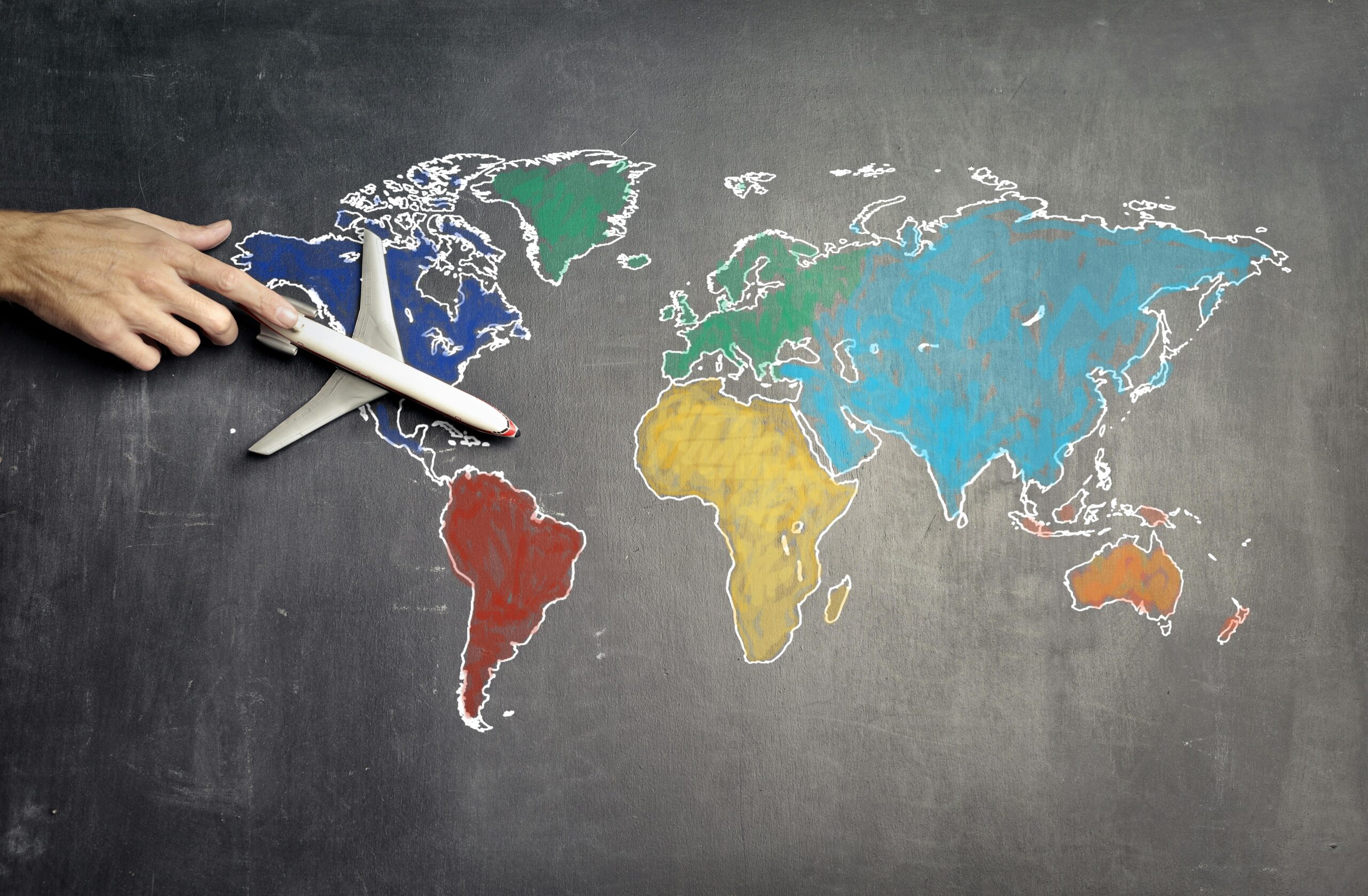
The world has transformed into a global village in the twenty-first century. Rapid developments in communication, transportation, and technology have connected people across continents more closely than ever before. People across the world are learning to live together because of globalization. The global village has brought many opportunities as well as several challenges. However, with pragmatic and cooperative measures these challenges can be addressed and the benefits of globalization can be shared more equally.
Overview of the World as a Global Village
The concept of a global village means that the world has become highly interconnected due to globalization. Interaction among people has increased through social media, international trade, and global institutions. People who once lived far apart are now connected instantly through digital communication and global networks.
However, globalization has also highlighted differences between the Global North and the Global South. Economic decisions of powerful countries often affect other nations. Moreover, some multinational companies have gained significant control over markets and resources.
Despite these differences, humanity is gradually learning to live together in a shared global environment where opportunities and challenges exist simultaneously.
Opportunities of the Global Village
United Nations as a Platform for Cooperation
One of the major opportunities created by globalization is the platform provided by international organizations such as the United Nations. The United Nations General Assembly allows countries to discuss international issues together and resolve conflicts through diplomacy. Through this forum, many global problems such as climate change, poverty, and humanitarian crises are highlighted and cooperation among nations is encouraged. The continuity of the Conference of Parties (COP) every year under the UN framework is an example of cooperation.
Expansion of Trade
Globalization has also enabled the expansion of trade among countries. Agreements such as the North American Free Trade Agreement (NAFTA) or agreement under WTO framework have encouraged the exchange of goods and services between nations. Through such trade agreements, countries are promoting economic growth, attracting investment, and creating business opportunities.
Because of globalisation, goods and services can now move across borders more easily, strengthening economic ties and increasing economic cooperation between nations.
Creation of New Employment Opportunities
Another important outcome of globalization is the creation of new employment opportunities. Global cooperation and free trade have expanded business and created many job opportunities. These job opportunities in the form of digital creator, digital publisher, logistics, global finance and high-skilled roles in multinational firms have given benefit to interconnected countries around the world.
Assistance to Vulnerable Countries in times of crisis
The global village also promotes international solidarity. When natural disasters or humanitarian crises occur, countries often receive assistance from the global community. International organisations and developed countries provide financial aid, food supplies, and medical assistance to help affected populations recover from crises. The disaster of Earthquake in 2005 in Islamabad was supported by the world’s countries and global Institutions. That indicates the benefit of the global world.
Transfer of Knowledge and Technology
Technological advancement has played a central role in transforming the world into a global village. Technology has created new opportunities for communication, education, and employment. Through social media platforms and digital networks, people can exchange ideas, promote businesses, and access global markets.
Local entrepreneurs and small businesses can now reach international audiences through online platforms, which increases economic opportunities and innovation.
Challenges of the Global Village
Despite these opportunities, globalization has also brought several challenges that require careful management.
Unequal Participation
One major challenge is unequal participation in globalization. Developing countries often struggle to compete with developed economies due to limited resources, weaker institutions, and technological gaps. As a result, the benefits of globalization are not distributed equally across the world.In his book “Globalization and Its Discontents“, Nobel laureate Joseph Stiglitz argues that the 1997 Asian Financial Crisis was primarily caused by premature capital market liberalization.
Economic Interdependence and crisis
Another challenge is economic interdependence among countries. A crisis in one developed country creates a ripple effect on other countries around the World. For instance, the 2008 financial crisis started in the USA and spread all over the World in the blink of an eye.
Cultural Tensions
Globalisation has intensified cultural interactions among societies. While cultural exchange can promote understanding and diversity, it can also create tensions when societies fear losing their traditional identities and cultural values. The case studies of Islamophobic attacks on Christchurch in New Zealand or the Southport Mosque attack in 2020 in the United Kingdom demonstrate the deepening civilizational divide between Western and muslim culture.
Global Corporate Monopoly
Large multinational corporations have gained significant influence in the global economy. These corporations often dominate markets, control technological platforms, and influence global consumption patterns. Their excessive power can reduce fair competition and widen economic inequality between nations and communities. For example, Silicon valley dominates the technological market globally. The takeover of WhatsApp group by Facebook or the purchase of X(formerly known as Twitter) by Elon Musk manifests the point that corporate monopolies are dominating.
Security Concerns
Global interconnectedness has also created new security challenges. Transnational crimes, cyber threats, and international conflicts can spread quickly across borders in an interconnected world. As a result, countries must cooperate more closely to address these emerging security threats. The epitome of security concerns is the incident of the Carolina Pipeline cyber attack on USA.
Measures to Address the Challenges
Despite these challenges, several pragmatic measures can be adopted to ensure that globalisation benefits all nations.
First, global institutions such as the UN Security Council, the IMF and the World BANK should be restructured to ensure fair representation of developing countries in international decision-making processes. This would make global governance more inclusive and equitable.
Second, countries facing economic inequality should adopt development models similar to Scandinavian countries, which combine democratic governance with strong welfare systems and social protection policies.
Third, governments should regulate multinational corporations to prevent monopolistic practices and protect local industries from unfair competition.
Finally, globalization should be guided by ethical principles that prioritize human welfare, social justice, and sustainable development rather than purely economic interests.
Conclusion
To sum up, globalization has transformed the world into a global village where people, economies, and cultures are increasingly interconnected. This transformation has created many opportunities such as international cooperation, trade expansion, technological progress, and knowledge sharing. At the same time, it has also produced serious challenges including inequality, economic dependence, cultural tensions, and corporate monopolies. Nevertheless, with inclusive policies and responsible global governance, these challenges can be managed so that the global village becomes a place where nations cooperate and humanity truly learns to live together.