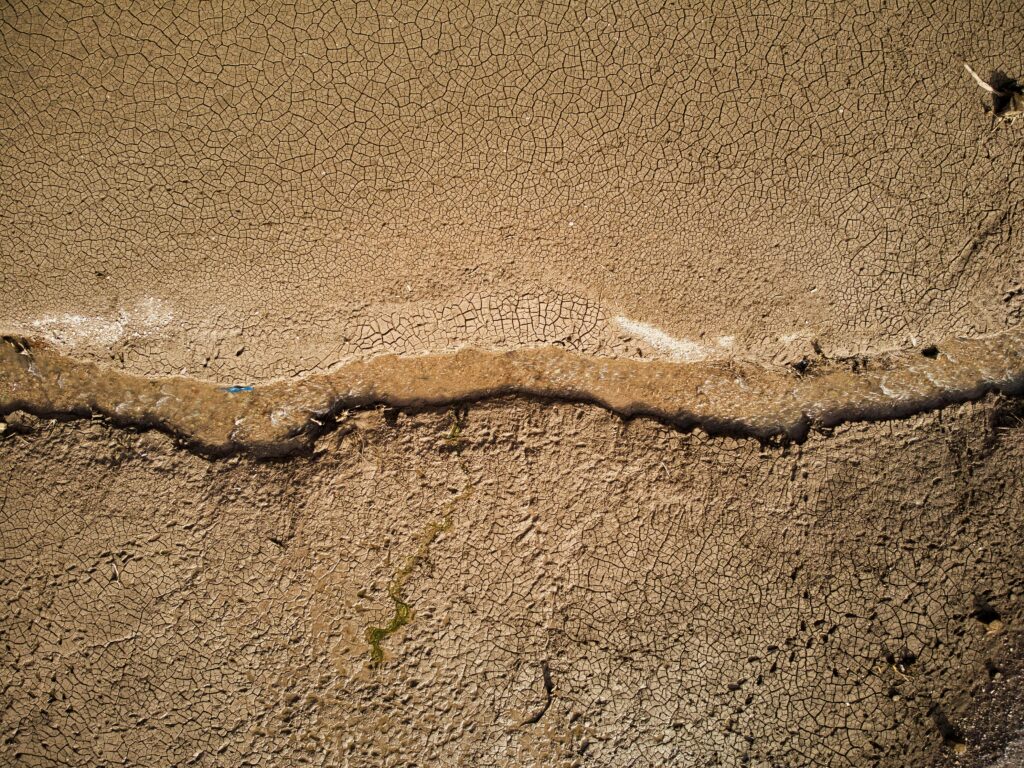
Imagine waking up one morning to find that the river your village has depended on for centuries has turned to mud. Imagine watching your crops wither under a sun that seems angrier than it used to be. Imagine fleeing your home as floodwaters—higher than any in living memory—swallow everything you own.
For millions of people across the developing world, this is not imagination. It is life.
Climate change was once discussed in the future tense—a problem for our children to solve. But the future has arrived, and it is merciless. From the submerged villages of Pakistan to the parched farmlands of sub-Saharan Africa, environmental degradation is no longer a distant threat. It is a daily assault on the foundations of human progress.
For developing nations, this assault carries a cruel irony. These countries contributed least to warming the planet, yet they suffer its most devastating consequences. Environmental degradation is not just an ecological crisis—it is a systemic obstacle to sustainable economic growth. It cripples agriculture, demolishes infrastructure, drains public health budgets, and traps nations in cycles of debt from which escape seems impossible.
This essay argues that environmental degradation is the single greatest barrier to development in the Global South. It examines the multifaceted ways in which a wounded environment undermines economies, deepens inequality, and erodes human dignity—and offers a vision for how nations can fight back.
I: The Anatomy of a Crisis
1. Agriculture: The First Casualty
In the developing world, agriculture is not merely an economic sector—it is the thread that holds societies together. It employs the majority of the workforce, feeds entire populations, and forms the backbone of exports. But environmental degradation is severing that thread.
Rising temperatures disrupt growing seasons. Erratic rainfall turns planting into a gamble. Soil erosion, driven by deforestation and poor land management, robs the earth of its fertility. In Pakistan, once a breadbasket of South Asia, agricultural productivity is stagnating. Farmers who once fed their communities now struggle to feed their own families. When harvests fail, rural economies collapse. When rural economies collapse, cities are flooded with migrants searching for work—and the cycle of poverty tightens its grip.
2. Infrastructure: Built to Last, Destroyed in Days
Developing nations have spent decades building the infrastructure that modern life requires—roads, bridges, schools, hospitals, power plants. But climate change has become a wrecking ball.
Consider Pakistan’s 2022 floods. Monsoon rains, intensified by climate change, submerged one-third of the country. The damage was not merely emotional; it was economic. According to the UN Environment Programme, Pakistan suffered an estimated $30 billion in infrastructure losses. Roads that took years to build were washed away in hours. Hospitals that served thousands lay in ruins. Every dollar spent on reconstruction is a dollar not spent on new schools, new factories, or new opportunities. Progress is not just slowed; it is erased.
3. Public Health: The Hidden Epidemic
Environmental degradation is also a public health emergency—one that rarely makes headlines.
Air pollution, much of it caused by the burning of fossil fuels, chokes the cities of the developing world. In Lahore, Dhaka, and Delhi, residents breathe air so toxic that it shortens lives. Respiratory diseases, heart conditions, and cancers are on the rise. Meanwhile, contaminated water—a direct consequence of poor environmental management—spreads cholera, typhoid, and diarrhoea. The World Health Organisation estimates that environmental factors contribute to nearly a quarter of all deaths in low-income countries.
The economic cost is staggering. Families drain their savings on treatment. Governments divert resources from education and infrastructure to healthcare. A sick population cannot build a prosperous nation.
4. Water Scarcity: The Coming Conflict
Water is the most essential resource on Earth. It is also becoming the scarcest.
In developing countries, agriculture and industry depend on reliable water supplies. The textile industry in Pakistan, India, and Bangladesh—which employs millions and generates billions in exports—is particularly vulnerable. When drought comes, rivers shrink. When rivers shrink, factories close. When factories close, workers lose their livelihoods.
Water scarcity is not just an environmental issue; it is a threat to social stability. As competition for water intensifies, so too does the potential for conflict—between farmers and cities, between provinces, between nations.
5. The Debt Trap: When Borrowing Becomes Bondage
When disaster strikes, developing countries have few options. They borrow.
They borrow to rebuild infrastructure. They borrow to import food when harvests fail. They borrow to provide emergency relief. But borrowing comes with interest. Over time, the debt grows, and countries find themselves in a vicious cycle: borrowing to recover, then borrowing again to service existing loans.
This is the debt trap of environmental degradation. It is a cycle that keeps nations dependent on foreign aid, unable to invest in their own futures. The World Bank warns that climate change could push developing countries deeper into debt, with devastating consequences for generations to come.
II: Beyond Economics—The Human Toll
1. Displacement: The New Refugees
When the land can no longer sustain life, people move. They leave behind homes, memories, and entire communities. Climate refugees are now a reality—and their numbers are growing.
The World Bank estimates that by 2050, climate change could displace more than 140 million people across sub-Saharan Africa, South Asia, and Latin America. These are not abstract statistics. They are families with nowhere to go, children with no schools to attend, and elderly parents left behind. Displacement tears the fabric of society. It breeds resentment, fuels conflict, and creates a permanent underclass of the dispossessed.
2. Poverty: The Vicious Cycle Deepens
Environmental degradation does not merely create poverty—it deepens it.
When a farmer loses his crop, he loses his income. When a factory closes due to water shortages, workers lose their jobs. When a family is displaced, they lose everything they own. The Asian Development Bank warns that climate change could push 100 million people back into poverty by 2030. For those who have only recently climbed out, this is not a setback—it is a catastrophe.
3. Gender: The Unequal Burden
In many developing countries, women bear the primary responsibility for collecting water, firewood, and food. When these resources become scarce, women bear the burden.
They walk longer distances, spend more hours working, and have less time for education or income-generating activities. Girls are pulled out of school to help their mothers. Women’s health deteriorates from the physical strain. Environmental degradation, in other words, is not gender-neutral. It amplifies existing inequalities and traps women in cycles of labor and poverty.
III: The Path to Resilience
The picture I have painted is undeniably bleak. But despair is not a strategy. There are solutions—proven, practical, and within reach.
1. Forest Restoration: Nature’s Solution
Forests are the planet’s lungs. They absorb carbon dioxide, regulate temperatures, prevent soil erosion, and sustain biodiversity. Protecting and restoring forests is one of the most effective ways to combat environmental degradation.
Costa Rica offers a powerful example. Through a national program that pays landowners to preserve trees, Costa Rica has doubled its forest cover in three decades. The result is not just a greener country but a more resilient one—with cleaner water, healthier soils, and a thriving ecotourism industry. Developing nations can adapt this model to their own contexts, turning forests into assets rather than obstacles.
2. Green Transportation: Moving Forward Without Moving Backward
Transportation is a major source of emissions. But it does not have to be. By investing in electric vehicles, expanding public transit, and promoting cycling, cities can reduce their carbon footprint while improving quality of life.
Bogotá’s TransMilenio bus rapid transit system is a shining example. It carries millions of passengers daily, reduces congestion, and cuts emissions—all at a fraction of the cost of a subway. Cities across the developing world can replicate this model, proving that sustainability and affordability can go hand in hand.
3. Technology Partnerships: Sharing the Burden
Developing countries cannot fight climate change alone. They need technology and expertise from the developed world.
Solar panels, wind turbines, and efficient irrigation systems exist—but they are often too expensive for the nations that need them most. Wealthy countries and international institutions must step up, providing grants, concessional loans, and technology transfers that make green solutions accessible to all. This is not charity; it is enlightened self-interest. A stable planet benefits everyone.
4. Artificial Intelligence: The Smart Shield
Artificial Intelligence is not just for Silicon Valley. It can also predict floods, model droughts, and optimize resource use.
In Bangladesh, AI-powered early warning systems have saved countless lives during cyclones. In India, AI helps farmers decide when to plant and irrigate, boosting yields while conserving water. Developing countries must invest in these technologies—and in the digital infrastructure to support them. AI will not solve the climate crisis alone, but it is an essential tool in the fight.
Conclusion
Environmental degradation is not an abstract problem. It is a daily wound inflicted on the world’s most vulnerable people. It destroys homes, steals livelihoods, and erodes hope. But it is not inevitable.
The solutions exist. They have been tested. They work. What is missing is not knowledge—it is will. Political will to prioritise long-term resilience over short-term gain. International will to share the burden fairly. Humans will believe that a different future is possible.
The fight against environmental degradation is not about saving the planet. It is about saving ourselves—and building a world where every nation, rich or poor, can not only survive but thrive.
The future is not yet written. Let us write it together