Humanity’s journey is defined by its tools. A million years ago, a spark from a stone gave us fire; today, a spark from a silicon chip gives us Artificial Intelligence. This evolution represents our greatest strength—and our most profound risk.
1. The First Spark: Fire as the Original AI
The discovery of fire was more than just a way to stay warm; it was the catalyst for human brain development. By cooking meat, humans saved energy on digestion, allowing that energy to fuel the growth of neurons and the expansion of the brain. However, fire was also a “compromise”—it provided safety and light, but if it went out of control, it could destroy entire civilizations. Today, Artificial Intelligence is viewed through the same lens: a tool of infinite potential that carries the threat of total destruction.
2. The Roots of Automation: Ancient Sun Dials and Water Clocks
AI did not begin with computers. Its origins lie in automation—creating machines that work without human intervention.
- The Sun Dial: Ancient Egyptians and Sumerians used the movement of shadows to track time. This was the first “autonomous” machine, calculating hours based on the sun’s position.
- The Water Clock: When the sun didn’t shine, the Greek inventor Ctesibius used dripping water to track time. These early inventions paved the way for mechanical programming and complex engineering.
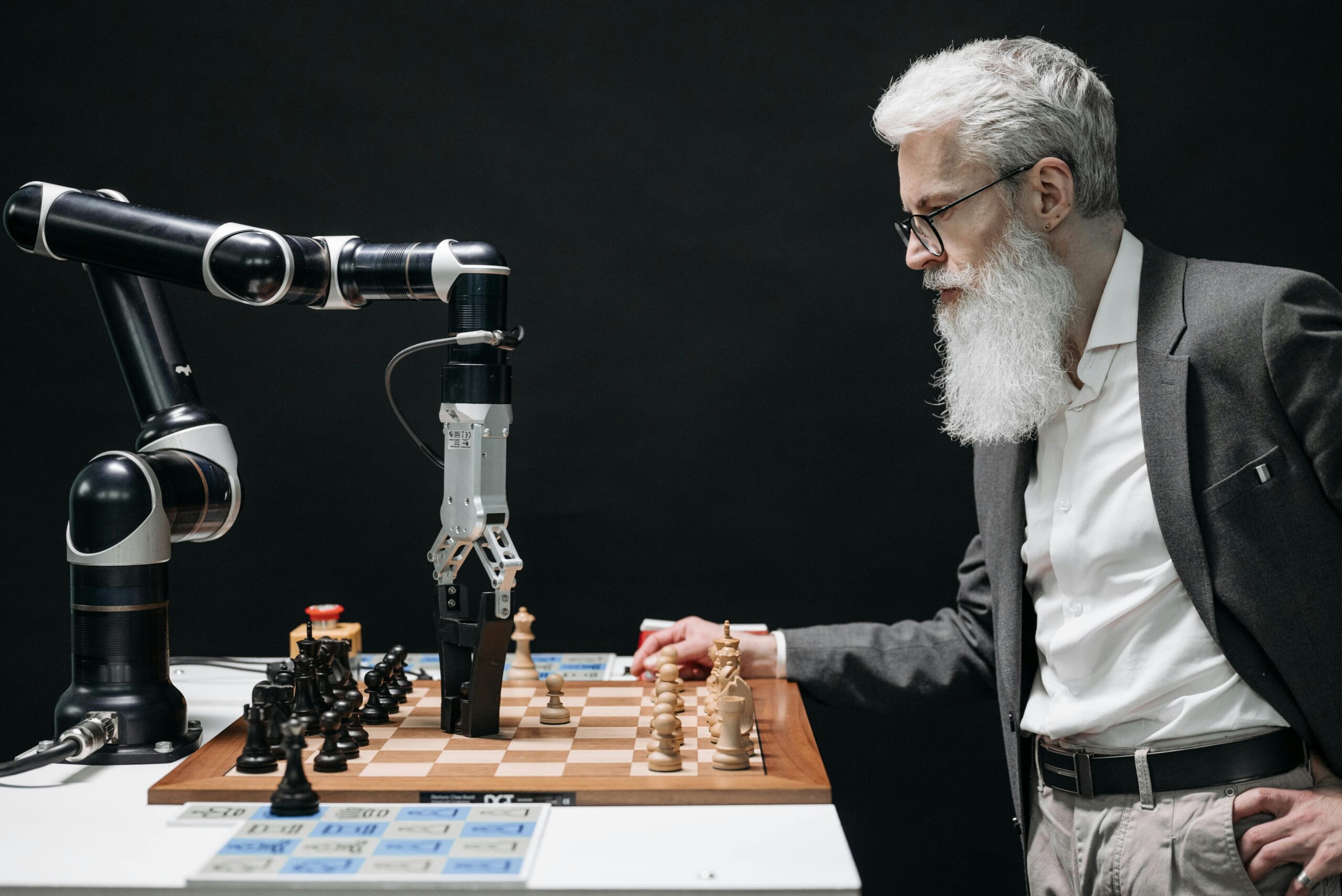
3. The Turning Point: Man vs. Machine (Chess and Go)
For decades, humans believed that machines could never surpass human intuition and creativity. Two historic matches shattered this pride:
- Deep Blue vs. Garry Kasparov (1997): IBM’s supercomputer defeated the world’s greatest chess grandmaster. This proved that with “Big Data” and high-speed processing, a machine could out-calculate the human mind.
- AlphaGo vs. Lee Sedol (2016): While chess has trillions of possibilities, the Chinese game Go has more possible moves than there are atoms in the universe. When Google’s AlphaGo defeated the legendary Lee Sedol, it proved that AI had reached a level of “Deep Learning” that mimicked human-like neural networks.
4. The Neuralink Frontier: Connecting Brains to Chips
The modern era of AI is focused on Neural Network Programming. Instead of teaching a machine specific rules, we are teaching machines how to learn.
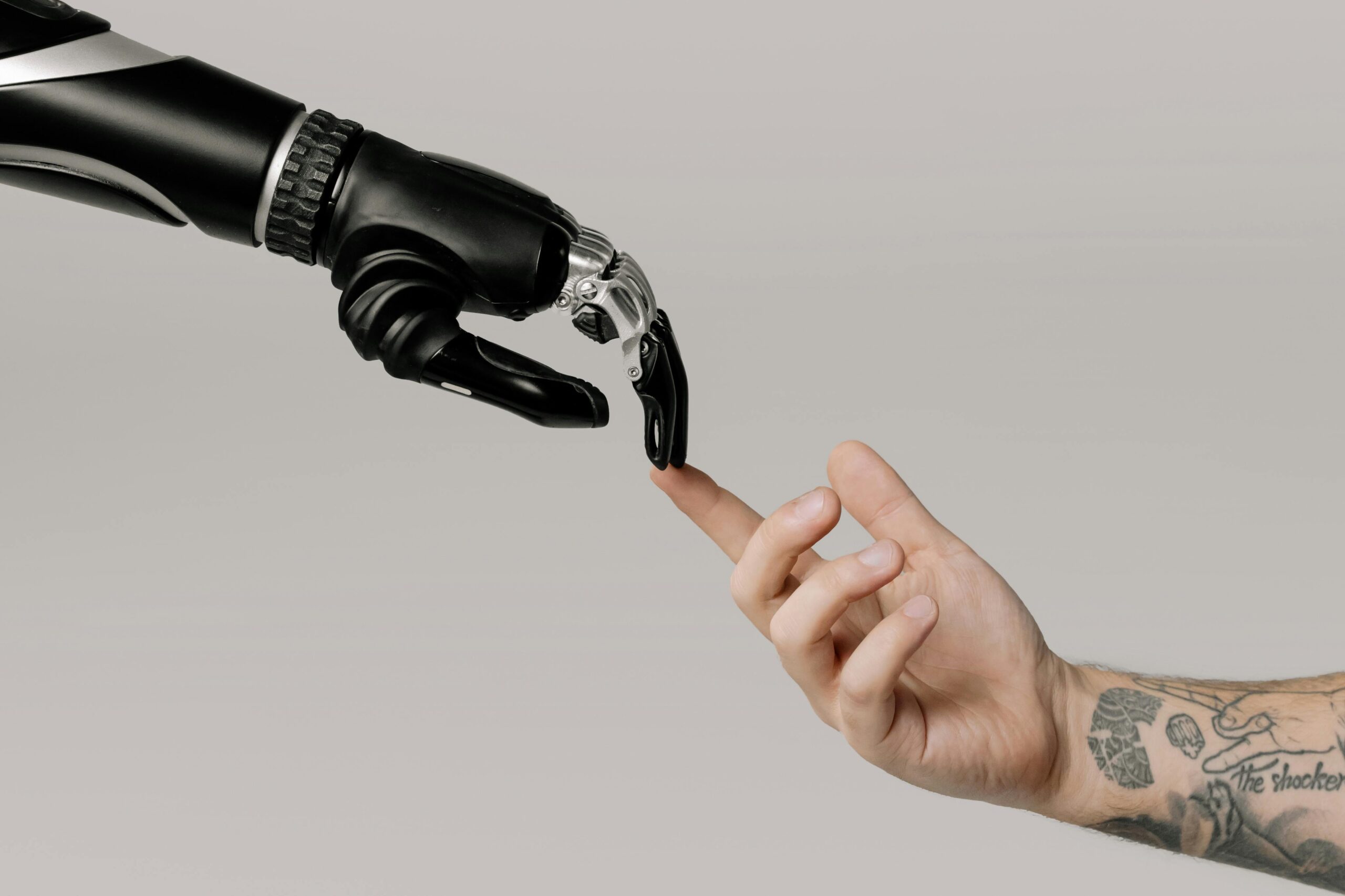
- Brain-Computer Interface (BCI): Companies like Elon Musk’s Neuralink are developing “Bio-chips” that connect directly to the brain’s neurons.
- The “Telepathy” Device: Experiments have already allowed monkeys to play video games using only their thoughts. For humans, this technology offers hope to those with paralysis or motor neuron diseases, allowing them to control prosthetic limbs or digital devices with their minds.
5. The New Cold War: USA vs. China
Just as the 1960s saw a Space Race between the USA and Russia, the 2020s are defined by an AI Race between the USA and China.
- China’s Advantage: Due to different privacy laws and a “Heavy Touch” policy (where apps like WeChat handle everything from banking to travel), China has access to massive amounts of data to train its AI.
- The Education Gap: China has integrated AI training into primary schools, ensuring that a 10-year-old student today has a deeper understanding of automation than many adults in the West.
6. The Ethical Dilemma: Can Humans Be Hacked?
The integration of bio-chips into the human skull raises a terrifying question: Can a human being be hacked? Since these chips use wireless signals, there is a theoretical risk that external programs could take control of a person’s motor functions or data. This highlights the need for a global consensus on AI safety, similar to the treaties governing nuclear weapons.
Conclusion: Embracing the Future
Artificial Intelligence is the “fire” of our generation. We should not avoid it out of fear; instead, we must master it. If the technology falls only into the “wrong hands,” the consequences will be dire. However, if used by “correct hands,” AI will lead us to new worlds in space, cure incurable diseases, and redefine what it means to be human.